I.
I went to Babylon on a Tuesday.
This is a detail I am including because the day of the week matters: not because anything different happens at Babylon on a Tuesday versus a Saturday or a Thursday or the second moon of Sagittarius, but because choosing Tuesday was itself a decision, and the decision reveals the thing I would prefer not to reveal, which is that I planned this. I hadn’t stumbled into Babylon drunk and swinging. I’d chosen it. Tuesday was the slowest night of the week, the night when the serious clientele outnumber the tourists two to one, the regulars and the retirees, lives organized around the specific architecture of steam and tile and anonymous skin. A night when you are unlikely to run into anyone you know. A night, in other words, engineered for not being found.
Gop was at a friend’s bar, helping out because someone was sick and the mamasan had called in favors and Gop, being Gop, had agreed because the Thai social obligation network runs invisible and total underneath everything, and declining a favor is the same as severing a thread. He’d be there past midnight. I’d told him I was tired, that the jet lag hadn’t fully broken, that I’d eat something at the hotel and crash early. He’d nodded, kissed my cheek, a quick press, not for the crowd but despite the crowd, and gone.
I ate pad krapao from a street cart on Silom. He eats his with an egg on it and pulls the yolk apart with the spoon first, every time, and I have watched him do it perhaps two hundred times and I did it that way myself, sitting on a plastic stool at seven in the evening, and then I got up and walked.
I walked with deliberate aimlessness, knowing where I was going but pretending I hadn’t decided yet: slowly, with pauses at shopfronts and 7-Elevens, checking the phone I have no reason to check, adjusting an itinerary already set. Soi Nantha, off Sathorn, past the embassy wall on one side and the immigration detention centre a few hundred meters the other way, which is a joke the neighborhood makes without intending to. Three hundred meters in on the left, the sign says BABYLON in letters that promise nothing and deliver everything.
II.
Babylon is built out of permission.
Shoes off at the door, into a numbered cubby. Bags stay at the counter, so you carry in nothing but the clothes you will change out of. Two hundred and thirty baht, the weeknight rate, cash, and the man at the desk hands over two brown towels and a locker key without looking up, and behind his shoulder a bank of small monitors shows the gym, the pool, the atrium and the changing room, so that a man can price the evening before he commits to it. There is a rack of security boxes for passports. There is a sign asking you to take your jewelry off before you go into the dark, and the sign is not decorative, and the men who ignore it come back out lighter and generally do not notice for an hour.
The locker room is chilled to the temperature of an American office. Nobody writes about that. The first shock in a Bangkok sauna is not heat, it is cold, the aircon running at a level this city reserves for buildings that want you to know they can afford it. A condom and a sachet of lube are already in the locker, waiting, like a mint on a pillow. You wrap the towel at the waist because that is the house rule tonight, and the house rule changes by floor and by night, and there are doorways in this building where an attendant stands and waits while you take it off before he lets you through.
Then the shower run: mosaic tile, serpentine, built so that no one walks it in a straight line and everyone is seen twice. A man came the other way with his towel over his arm instead of around it, wet to the shoulders, and looked at me for exactly as long as it takes to decide something, and went on past. That is the building introducing itself. It does not shake your hand.
The pool is out in the garden under the neighbors’ high-rises, which is why nobody swims naked in it. Blue, lit from beneath, the loungers gone by early afternoon. Men sit on the edge with their feet in the water, towels loosely arranged, bodies ranging from the professionally maintained to the frankly abandoned to the quietly desperate. Some are Thai. Most are not. I walked the length of it and two of them looked up and neither looked twice, and I filed that the way you file weather on a day with no plans in it.
The tile had gone from cool to blood-warm under my feet somewhere in the corridor to the steam room, and here is what I have told myself about this place the whole way there: that the sauna is the anti-bar, that nobody pays anybody, that its fundamental innovation is the elimination of the transaction. It is nearly true. There is no bar fee here, no mamasan, no number pinned to anyone’s waistband, and whatever happens upstairs happens for free. That part is real and it is why I come.
It is also true that Thai men call this the sauna that is full of money boys, and that nobody here will ever quote you a price, because what actually happens is a man goes upstairs with you for nothing and then mentions afterward, over noodles at the mouth of the soi, that he would like to go shopping tomorrow. The money does not change hands in the building. It waits outside the building. And a young Thai who badly does not want to be taken for a money boy will keep his eyes off a farang for precisely that reason, which means that on any given night some unknown fraction of the men not looking at me are not looking at me on purpose, to protect themselves from what I might assume.
This is the part I do not write about.
Not on the blog. Not in emails to Dave. Not in the running commentary I have kept in my own head since I was fourteen, which narrates my life as though somebody were going to want the manuscript. That voice goes quiet in this building. Not as a choice. It just stops being audible somewhere between the pool and the door marked STEAM.
There are two steam rooms and one of them is usually shut. The one that works is dark. Not dim. Dark in a way that people who have only been in American bathhouses do not expect, where you stand inside the door for half a minute waiting for your eyes to adjust and they never do, because there is nothing in there to adjust to. The heat is saturated past the point where breathing is breathing. You swallow it instead.
You sit. You wait. Nobody speaks, and the men who speak the most in this building are the men having the least sex. The protocol is proximity: a man comes and stands near you, and stays near you, and lets you register that he is still there, and then a hand arrives on a thigh or a hip or the towel. There is no question asked. If the answer is no, the hand is lifted off and the body turns away and the man leaves the room, and nobody has lost anything, because the whole grammar is built so that nothing was ever formally offered.
I sat on the upper bench. The heat worked through and took the day off me: the pad krapao, the Silom exhaust, the faint soap smell of Gop that I’d been carrying on my skin since morning. The steam stripped it all.
Just the body you brought.
III.
I sat there for forty minutes.
Six men came in and six men went out, and I was hard for most of it, which is not a thing I am reporting as an achievement. It is what the room does. The heat, the dark, the wet bench, something two benches over that you are not supposed to identify and identify immediately. The building works on you whether or not it wants you. Those are two different systems and nobody has ever explained that to the body.
One of them came and stood in front of me. Close. Close enough that I could feel the heat coming off his shins against mine, and I sat still with the towel doing what a towel can do, and after a moment I understood that he was looking at the man to my left.
Nobody was rude. Rudeness is not the register. A man comes in and his eyes pass over you at the speed eyes pass over furniture, and they stop somewhere else, and he sits down somewhere else, and the room absorbs it without comment.
He stayed there a while. I sat under him in the dark, hard, being looked past, and both of those facts went on being true at the same time, which is the part I had not budgeted for.
In the bars the arithmetic runs in my favor every single time, because in the bars I am a wallet with a pulse and a good reputation. Here my wallet is in a locker on the ground floor with my passport in it and my watch beside it, and what is left is a fifty-something body on a wet bench in the dark, and this room prices it accurately and without malice, which is worse. I have seen the number this room produces and I would rather not publish it.
Then the swimmer sat down.
He was Thai, mid-twenties, lean where Gop is thick, smooth where Gop is built. Long muscles, narrow through the waist, one of those bodies that reads better wet than dry, which in a steam room is a permanent structural advantage. He sat close enough that our thighs touched and then he left them touching, which is the local pace and which I have never managed to learn.
We did not speak. That is this building’s one great gift and the reason I keep paying to walk into it: no names, no occupations, no where you from, no how long you stay, no terms, no off fee, no joiner fee, no mamasan counting notes with her lips moving.
His hand went onto my thigh and stayed there a long time before it went anywhere else. Mine went onto his chest, and steam-wet skin is not the same substance as skin, it is slicker and somehow thinner, and everything you do to it registers louder. He was hard before I touched him. He moved my hand onto it and then took his own hand away, a thing I still turn over: he made it my decision after making it inevitable. Uncut, longer than Gop and thinner, and so hot that for a second I genuinely could not separate the heat of him from the heat of the room. The salt came up when I put my mouth in the hollow of his throat and he arched, and never made a noise. The dark gives you no face. You learn a man entirely from what his hips do.
We went up to a cabin on the second floor. A room the size of the bed, because it is the bed, a platform and a mattress in a plastic cover and a light on a dimmer that somebody before us had left turned almost off. The door does not lock. There is a gap in it at eye height, and twice while we were in there a man stopped outside and stood, and neither of us looked up, because being watched is not an event in this building, it is the weather.
He went down on me unhurried, without any of the small performances that get built into a service, and the plastic under my shoulder blades went slick and stuck and unstuck as I moved. Somewhere in it the part of me that had been sitting on that bench half an hour earlier put its head up and asked what a man who looked like this was doing on a mattress with a man who looked like me, and I put it back down, and it did not stay down. Halfway through it he took my wrist and laid my hand on the middle of his chest and held it there, and I read the move at the speed I read everything, because it is a move, it is on the menu at every bar on Soi Twilight: the beat where the boy makes you feel chosen. I was still pricing it when I felt what was under my palm. His heart was going like a man running for a bus. Either the gesture had never been on any menu, or he was better than anyone I have ever paid, and I could not tell which. Then I went down on him and he put both hands flat against the wall behind his head and kept them there. He came first. He made one sound when he came, one, and I have thought about that sound more than about anything else that happened in that room. I came a minute later with his hand resting on the back of my neck, no pressure in it.
The whole thing took perhaps twenty minutes and cost two hundred and thirty baht, which was the entrance fee, which I had already paid, and which I would have paid anyway.
We lay in the dark for a minute, maybe two, the mattress damp, the air thick, his breathing slowing beside mine. Then he sat up and put two fingers flat on my sternum, the way you press a button that is already lit, and held them there long enough that I started to hear it as a sentence. He said something in Thai. Four or five words, unhurried. Then he wrapped his towel and went out and left the door swinging.
That was the first thing anyone had said to me inside those walls all night. I have enough Thai to buy silver and argue about a fare. I did not catch any of it. It could have been goodnight. It could have been the time. It could have been the name of the noodle stand at the mouth of the soi, three minutes on foot, griddle going till three.
The door swung and stopped. I could have put a towel on and been down those stairs in forty seconds and had it settled one way or the other inside a minute. That is the whole of the instrument I own and I have never once declined to use it. I stayed where I was until I was certain he was out of the building.
The cabin was as quiet as it had been all night. It was not the same quiet. It was the quiet after a man has spoken, and the entrance fee does not cover it.
Alone on a mattress in a private room in a sauna on a soi off Sathorn, staring at a ceiling, and what I thought was this:
This is what it was like before.
Before Gop. Before the hand on the thigh and the “I lie you” and the ceramic cats from the night market and the gifts for my mother and the hundred and six days and the blog and the word mine where variety used to be. Before all of it. This is what I was. Nobody’s farang. Nobody’s patron. Nobody’s love.
I missed him. Five minutes after coming in a stranger’s mouth, on a wet mattress in a building I had chosen because nobody in it knew my name.
I showered, and went up to the cooling area with the towel back at my waist.
IV.
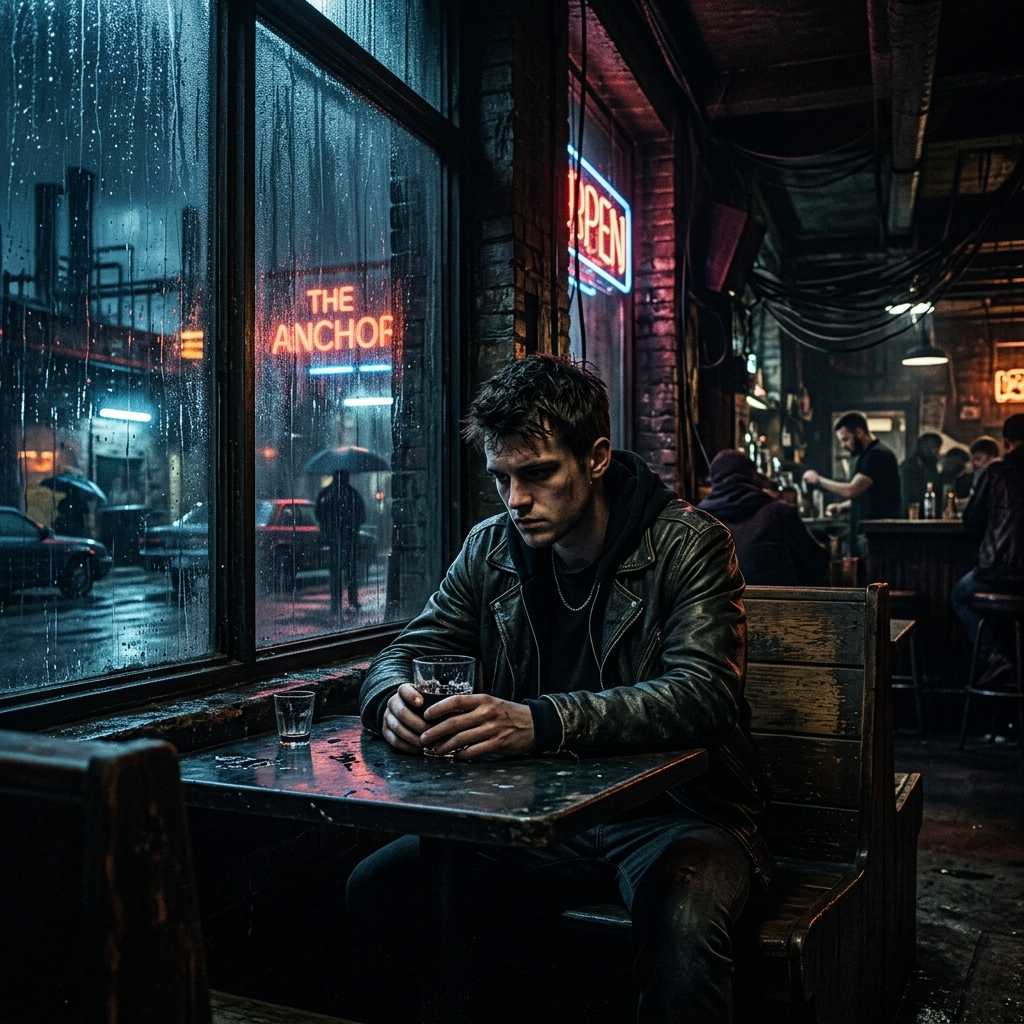
The cooling area at Babylon is a terrace. Open air, potted palms, a bar serving beers and fruit shakes to men in towels who have recently done things they will not discuss at breakfast. The night sky above: Bangkok’s sky, hazy, orange-lit, the stars replaced by the ambient glow of a city that never achieves darkness. I ordered a Singha. I sat in a plastic chair. I did not check my phone.
A young guy at the bar, alone, drinking too fast, was doing the thing everyone does the first time: pretending to check his phone while actually watching the door to the pool. I remembered being him. I did not go over.
The man at the next table was German. Seventy, maybe older. The body had been big once and was deflating now, the skin loose on the frame like a suit bought for a larger man. He had a beer in front of him. The chair had molded to his shape long ago, and so, it seemed, had he.
“First time?” he asked. His English was accented but precise.
“No.”
“How long have you been coming to Thailand?”
“Twenty-six years.”
He nodded, recognizing his own history in my numbers and unsurprised by it. “Twenty-two for me. Frankfurt originally. Retired here in 2004. Pension, small condo in Ari, the usual arrangement.”
I didn’t ask what the usual arrangement was. I knew what the usual arrangement was. The usual arrangement was: a Western pension stretched across a Thai cost of living, a condo chosen for proximity to a BTS station and a selection of bars, a life organized around the pursuit of youth long since departed, so long gone it qualified for a historical marker.
“You have a regular?” he asked. He asked it in the tone you’d use to ask a man if he had a car.
“Yeah.”
“How long?”
“Few years.”
He smiled. The smile of a man who has been asked the same question and given the same answer and knows that few years is the beginning of a sentence whose ending neither of you wants to pronounce.
“You knew Pussy Galore,” he said. Not a question.
“Queen’s Castle One,” I said. “Then just Queen’s Castle. Then nothing.”
“Fire Cat.”
“Wild Cat. Same room, new sign, and the second one outlived the first by years.” I was enjoying myself. That is the honest word for it. There is a pleasure in this that I have never been able to account for and have never tried very hard to, the pleasure of being the farang who was actually there, and I had it in my mouth like a coin.
“Star of Love,” he said.
“Star of Light.” I gave him the year it changed over. He did not have the year. He inclined his head about a centimeter, the way you concede a point you were not really contesting, and let me keep it.
Then he said, “And where are they now. The men who were sitting in them.”
I did not answer that one. He had not asked it to be answered.
“I had a regular for eleven years,” he said. “Wonderful boy. Drove me crazy. I paid for everything: the family, the house, the motorcycle, the girlfriend.” He paused. “The girlfriend was the end. Not because I was jealous. Because he lied about her. And I realized the lie wasn’t about the girl. The lie was about me. He lied because he thought I couldn’t handle the truth. And he was right. I couldn’t.”
The beer sweated in my hand. The terrace was quiet, the low hum of conversations held between men who had recently been naked together and were now performing the post-coital ritual of pretending that what happened downstairs was separate from what was happening up here, that the body and the conversation occupied different jurisdictions.
“You think you’re different,” the German said. Not accusatory. Diagnostic. The tone of a finding he’d made before, on himself.
I gave him the pan version. I have been giving people the pan version most of my adult life and it comes out smooth because it has been sanded by use: that I like the culture, that I like the travel, that the exchange rate makes a life here possible that is not possible at home. It takes about forty seconds. I have said it to my accountant and to a woman drying a pan in her own kitchen and I said it now to a retired German in a towel, and it came out exactly as it always does, which is well.
He waited until I had finished all of it. Then he said, “Yes. We all say that one.”
“We all think we’re different. The ones who come for thirty years, who learn the language, who know the mamasans by name. We think our version is special. That we’ve figured out the system. That we’re not the sad old men at the end of the bar. We’re the sophisticated old men at the end of the bar.” He drank. “Same bar. Same stool.”
I had better arguments than the pan version and I did not reach for any of them.
I looked at the terrace instead. Four men on the loungers, two of them well inside earshot, none of them looking over. All of them listening. I was certain of it then and I am certain of it now.
“Good night,” I said. I finished my beer. I left the terrace.
V.
They put the lights on downstairs at half ten, which is Babylon’s way of telling you the evening is a building with opening hours and you are not special inside it either.
I did not go back. I ate somewhere off Sathorn and then I walked, the long way, because the room I was going to was empty. Silom at midnight had the neon still burning and the vendors breaking down their carts, the particular melancholy of a city transitioning from commerce to sleep. The air: diesel, plumeria, charcoal, the sweet rot of overripe fruit composting in a gutter. My body was clean from the sauna shower and loose from the steam. A taxi at the end of it, because the BTS had stopped and Sukhumvit is not a walk.
I checked my phone. A text from Gop, sent forty minutes ago:
U sleep? I come hotel when finish.
I typed: Not sleeping. Come.
I stood on the sidewalk outside the hotel and waited a long time, which I could have done in the room. The night traffic of Sukhumvit ground past: taxis, tuk-tuks, the occasional motorcycle bearing two riders, neither helmeted, both trusting in the gods or in the statistics or in the Thai national conviction that fate is a personal matter between a man and his karma and the helmet industry has no business intervening.
Gop arrived by taxi. He was in his bar clothes, the too-tight shirt, the jeans that fit his thighs like a second opinion. He smelled of cigarette smoke and cologne and the particular sweetness four hours in a gogo bar leaves on a man: secondhand sweat and aerosol and the metabolic output of a dozen dancing boys. He grinned. The grin.
“You no sleep,” he observed.
“I no sleep.”
He gave me a close, assessing look, the quick scan he’d learned to run on my face, the same scan I ran on an exchange rate, reading for fluctuations, for trouble, for the micro-movements that signal a shift in value. He saw something. I don’t know what. Maybe the leftover steam. Maybe the ghost of the swimmer. Maybe the German’s words, still circling like birds that can’t find a place to land.
“You okay?” he asked.
“I’m okay.”
He didn’t believe me. But he took my hand: grabbed it, same as always, publicly, on the street, in front of the doorman and the taxi driver and the night vendor across the road selling grilled squid, and pulled me inside.
In the room, the standard sequence played out reversed. He showered. He came out in a towel. He climbed into bed. He reached for me. His arm across my chest: eight pounds, maybe nine, the specific weight I had catalogued, the weight that pinned me to the mattress and to the moment and to him. His body I knew better than any steam room stranger’s, his mind not at all.
“I miss you,” he said. Simple. Two words and a pronoun. No framework, no exchange rate, no justification attached. He just says it.
“I miss you too,” I said.
The gecko on the ceiling watched us. The AC hummed. His breathing slowed. Outside, the last of the carts were folding away and the soi was emptying by degrees. I lay there with his arm across my chest and did not move it.
I did not write about the sauna. Not on the blog. Not anywhere. This is the only record, and the twenty minutes come to a room, a door, four or five words I could not read. The camera in this account does not point at me. It never has. It points at Gop, at the boys, at the mamasans, at the soi. And even this I’m not sure I’m telling straight.