Every new slave at Beauvert was caned on his first night. It was not a punishment. I had been there an hour and done nothing to be punished for. What is required, Milo called it, which was the phrase for everything done to us there, but what it taught me, that first night and under all the rest, was a plainer thing, and the ground my whole life there stood on: that my body was no longer mine. It would be washed, shaved, fed, harnessed, hurt, and used as other men saw fit, and what I felt about any of it would not be asked again. He spent few words on the matter, and walked me out to the yard, where a bench stood that had not been there at dusk: low, broad, black with use, squared on the stones. They had carried it out while I was under the razor. I was glad, after, that I had not watched them do it.
The Master did not come down for it. He never came to these. I have chosen to think he had no taste for the watching, and left such work to Milo. They were processing me, was all: stock, the word they had for us, which I have not in all these years got to sit quiet in me, for all that I have been it now far longer than I was ever a man with a name, and the house saw to its new stock as a careful house sees to anything it means to keep.
I did not think it unjust. Wrists going cold in the blue dusk, I told myself what I would go on telling myself for twenty years: that I had it coming. I had carried a thing across their sea their law forbade, and read the law on the dock and carried it up the gangway regardless, and the man with the cane had written my sentence no more than a waiter writes your bill. It was a comfort to believe the world had a reason in it and was not merely tearing me up for sport, and if the price of that comfort was to call myself the author of my own ruin, I paid it, and thought it cheap.
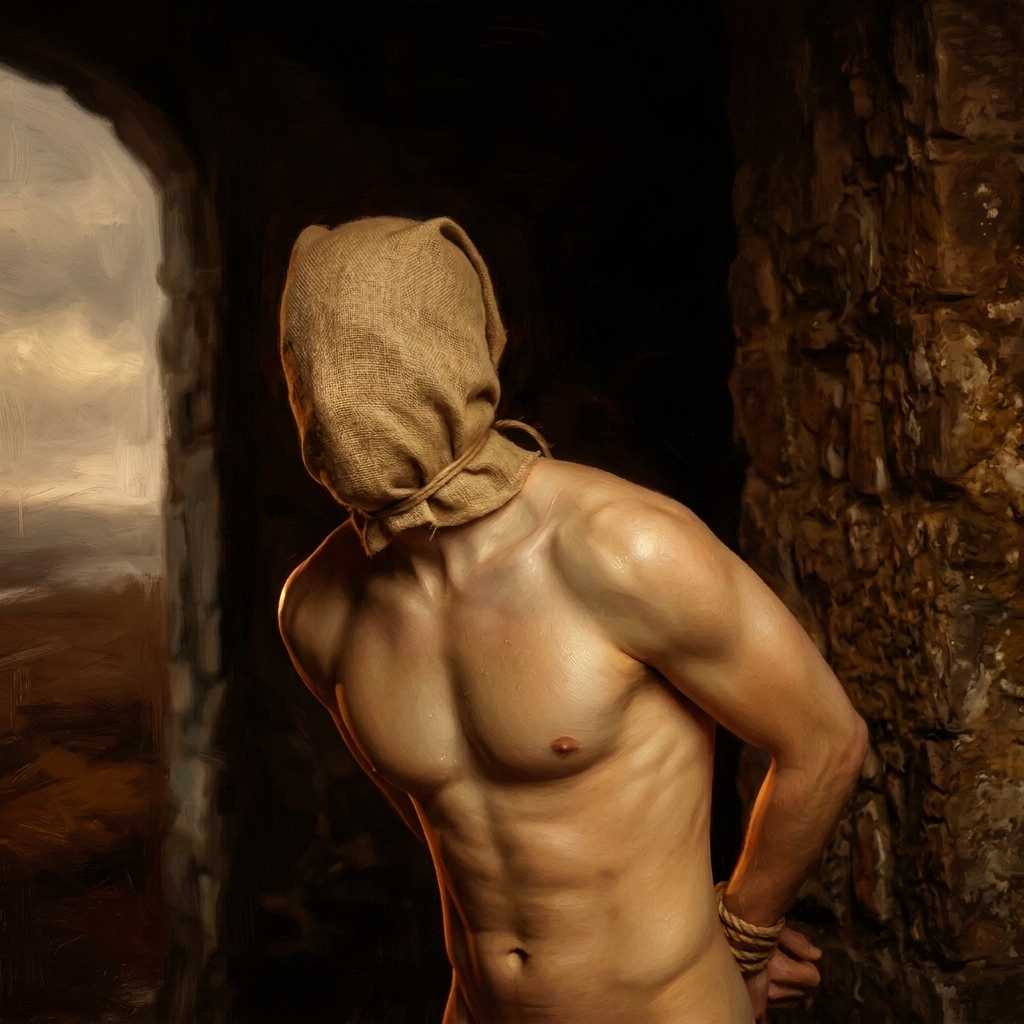
Two grooms bent me over the bench. The wood was cold against my belly, and warm in patches from the men who had been over it before me, which I have never since forgotten. They drew my wrists forward to the rings at the head of it and buckled them, and my ankles back to the rings at the foot, and hauled the straps tight until I could not shift an inch, until the bench had all my weight and I had none of it, and there was nothing left of me to govern but my breath.
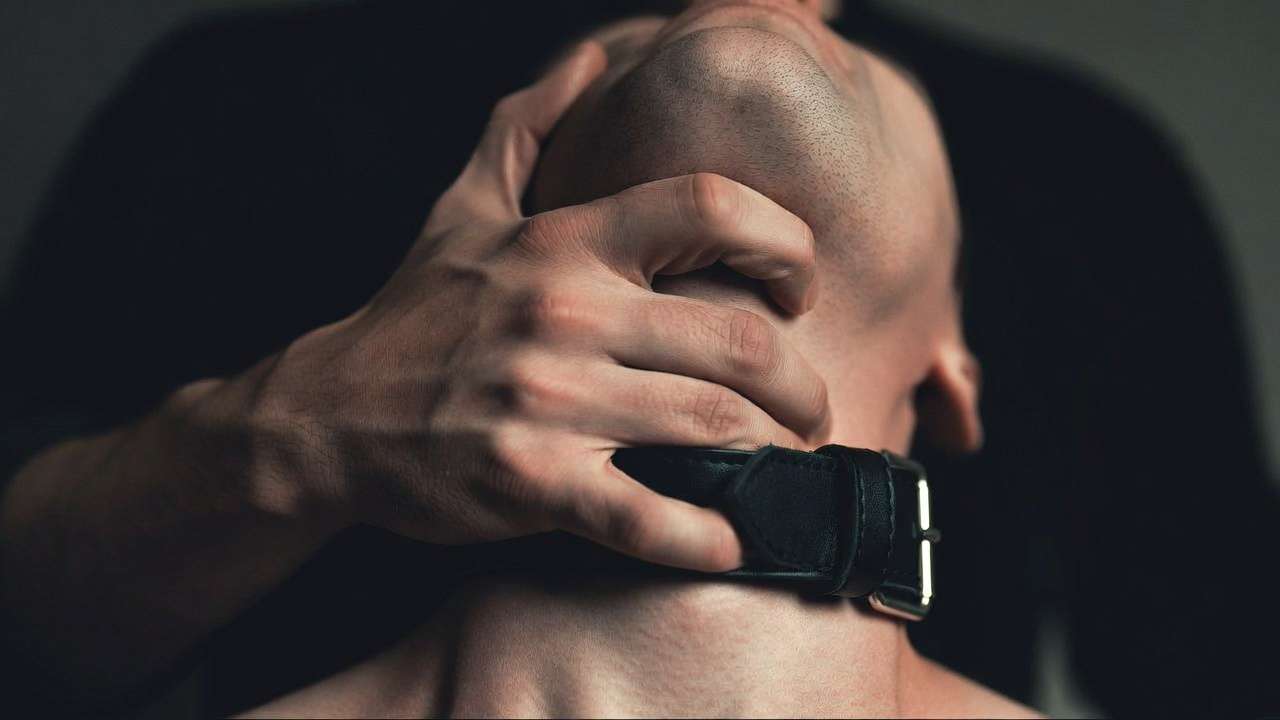
A slave at Beauvert made no sound, and a new man cannot be trusted to keep that silence, so Milo bitted me. He set his thumb in the hinge of my jaw and pressed until the mouth came open against my will, and worked the iron in over my tongue, and buckled it fast behind my head, so the corners of my mouth were dragged up into a grin that was not one. I gagged on it, and could not even do that aloud. I had seen its like that afternoon, on the pony in the lane, and pitied him the wearing of it. It shames me past the cane to say so, but I will say it once: the iron forced on my jaw that night, foul and strange as it was, I would in a few years crave the cold taste of, and not know my own mouth without.
Twelve, Milo said, the same for every new slave, told off as the porter at Maitland & Roe had read our chips, one number among the day’s numbers.
The first of them I can still give you exactly. There is a moment between the sound of it and the feel, no longer than a heartbeat, in which the mind files the crack as something happening across the yard, to someone else, and then it arrives, not a blow but a bright unarguable line laid across the backs of my thighs, as though the cane had opened me and poured something molten in. My whole body lunged against the straps, which did not give, and I heard the sound I made, shapeless and caught behind the iron, before I had any say in it: the first proof that my body was no longer mine. Of the other eleven I will tell you nothing, because I kept nothing: somewhere past the third the strokes stopped being numbers and became one rising thing, and I went away from the count, from the yard, from myself, which is the single mercy the bench affords, and the whole of what it has to teach.
I knew it was over only because the next did not come, and I went on bracing some while after, my whole back drawn up to meet a thing that was not on its way.
Milo drew the bit out first. The iron came away wet and trailing, and my jaw, let go, would not stop its shaking. The spit ran off my chin and I had no thought to mind it. Then the wrists, then the ankles, and when the last strap gave, the bench was all that held me, and he took me under the arm and set me on my feet, for my legs had their own opinion in the matter and it was not to bear my weight.
The standing was its own country. To be upright was to feel the welts become a separate creature on the back of me, and to take a step, for he meant me to walk, there being no carrying at Beauvert, was to go as on coals, in the small ridiculous steps of a very old man, grateful only that the dark had come and there was no one in the yard to see me but the steward who had made me.
He oiled the welts with his own hands, unhurried, sparing me nothing and hurting me no more than the work asked. Then he set a bowl on the stones before me, barley and warm, and told me to eat. I had not known I was starving until I smelled it.
I reached for it, out of the plain habit of a man at a table. Milo caught my wrist, not hard, the way he did everything, and laid it back at my side. “No hands,” he said. “The mouth only, like the rest of us. You’ll learn it.” And he stood over me while I did: bent to the bowl on the ground with my hands behind me and the welts singing, my face down in it like the animal I now was. “It goes easier if you eat,” he said, and it was true, and I ate, and was grateful to him for the barley and ashamed to the soles of my feet, and could not have told you which was the larger thing.
That he stood by, that the order of the house did not require the steward to stay, nor to make the lesson gentle, I took for kindness. That much was his own. I thought him kind, and have thought him kind every night since, and not let the world take it from me, though it found him reasons later and asked me to agree.
I will not tell you I liked it. But I have had the years to understand it, and I do. You cannot hold two thousand strong men by kindness, there being none to spare. You hold them by teaching each one, the once, that his strength will buy him nothing, and the few who will not learn it the once are taught it slower, in the yard, with the rest of us stood round to watch. I saw that done, in my time, to a bigger man than me. It took. And the Master’s gentleness, that I was so soon to be grateful for, was the same lesson from its softer end: break a man clean on a set evening, and you need never lift your hand to him again, and may be kind to him ever after, and praised for it.
I grant all that. I have not managed to stop granting it. And I have hated it every day just the same, uselessly, the way you hate a sea that drowned someone, and the granting and the hating have lain side by side in me twenty years and never made their peace. That a man can be brought to grant the thing that broke him is the worst of what the bench did to me. The welts closed in a fortnight. That has not.
And then, at last, the straw. For a worked animal is promised its stall to keep it moving the last mile, and I had been promised mine the whole of that day. He took me down the long stable to a box near the end of it and hobbled me: a short chain locked ankle to ankle, the links cold against the skin, that snatched me up short when I tried a step, two hands’ span of stride and no more. It was how they kept the ponies of a night, I would learn, loose in the hand and short in the leg, so that a man might see to himself but could not run. He drew the bolt across, and his lamp went back up the row and out.
I did not know what was wanted of me there. That was the strangeness I had not been ready for: that there were rules for everything, for the head and the eyes and the voice, and none yet given me for this, for how a man lies down in the dark on the first night of the rest of his life with his back on fire and the straw finding every welt. Down the row the other ponies shifted and blew in their boxes, great patient shapes settling for the night. And I was not alone in mine.
At the back of it, down in the straw, was the pony, the one from the lane, the one from the rail. Jack. He had lifted his head at the bolt and known me, I think, for we had stood washed side by side not three hours before, and he had drawn the trap with me running at the tail of it half the afternoon, and finding it was only me, he shifted himself, by no great amount, to leave me the banked straw against the wall, where it was softest.
I lowered myself into it on my side, there being no part of my back that would take me, and for a while neither of us did anything but breathe. Then he spoke, low, barely voiced, for the dark of the boxes was the one place at Beauvert the silence loosened, where a man might say a few words and not be called to account for them. I have kept his words by heart, better than I kept the Master’s from all that year, which is a thing about myself I was slow to understand.
“First one’s the worst,” he said. “Whatever they tell you after. You got through it.” And then: “I’m Jack.” He knew already what I was called, for he had been there on the road, in the shafts, when it was put on me, so he did not ask me that. He asked the other thing. “What was your name? Before.”
It is a small thing, to ask a man his name in the dark. It has stayed with me longer than the cane. I went to answer him, the name was right there, the one my mother gave me, that I had carried over the sea, and found I had nowhere to put it. It belonged to a free man with a trade and a mother and a country, and that man was not coming back. The name had nothing left to fasten to. “It doesn’t matter,” I said. “It’s no use to me here. I’m Thor now. That’s his word for me. The one it belonged to got left on a dock, and he isn’t coming back for it.” I said it lightly, the way you say a thing you have decided not to feel.
In the dark beside me Jack let out a low sound, something near approval, though I could not read it then. “You’ll do,” was all he said. I took it for comfort, and comfort it was, from a man whose own name was as gone as mine, who never gave it me and was never asked. But it was the other thing as well, that I would be years in understanding: the question had been a test, the one the old hands put to every new man his first night, and I had given the answer that meant I would bend, and last, and make a slave worth the keeping. The man who fights to hold his name has a hard road and a short one. The man who lets it go as easily as I did, the place will have no trouble with. Jack heard me give mine up in three sentences in the dark, and was glad of it the way you are glad of anything that means a man will live, and sorry in the same breath.
And the asking did not stop with me. I would come, in my years there, to be the old hand in the dark myself, beside some shaking new arrival fresh off his own bench, to ask him, low, what he had been called before, and weigh how he gave it up, or would not, and know which kind I had. We put it to all of them. I have refused my own name ever since, to everyone, you among them, and whether the thing in me that would not say it that first night was grief, or surrender, or whether by then the two had grown to be one, I have never been able to tell.
After a while, as though it followed, he said: “You don’t get used to the bench. Don’t believe them when they say you will. You get used to getting up off it. That you can learn.”
And then, in the same plain voice: “Do you want a hand?” I did not take his meaning at first, and then I did. I was eleven weeks out of a country where a man did not do such a thing with a man, did not take another in his hand, or his mouth, or wish to, and I had wanted women the whole of my life, only ever women, and the thing he offered me, kindly, there in the dark, I had no map for and no wish to be given one. “No,” I said, and badly, stiff and afraid, of him a little, but more of the door he had set ajar. “No. Thank you.” He laughed at that, low and not unkind. “It keeps,” he said. “No hurry on you.”
And here is the thing that shames me past the refusing: the hand I would not take that night I would, before the year was out, lie awake waiting for, and reach for first in the dark. What I drew back from in horror I came to want. The no I gave him so stiffly was the last of the free man in me talking, and the free man was dying already and did not know it. For that is how the place worked on you, not all at once and not by force alone, but by letting you refuse the first time, so that you might live to watch yourself accept.
But Jack had run the shafts all that day, and a body has its wants whether a new man will help with them or not. “No women here,” he said, half to himself, easy and unashamed, “and none coming. You take the kindness that’s going, down here, or you wear yourself out wanting.”
(There were women for a few of us, in fairness, the soundest sent to the breeding-houses in their season and brought back. Jack had been, years before my time, and whatever he had got on them he was never told of and never shown, as a stud is never shown his get. That I would come, in the end, to envy him even that, even the faceless women, even the young of his blood, somewhere, that he would never see, is a thing for further on.)
And he turned his head and gave a low two-note whistle down the dark of the row. After a moment there came a soft quick patter of bare feet, and a boy let himself in over the half-door of the box and folded down into the straw with us, easy as a dog coming to a known hand.
“I’m Finch,” he said to me, warm, as if we had met at a fair and not in a locked stall in the dark, and he put his hand out to be shaken, a thing no slave at Beauvert did, or was let to, that he must have learned somewhere and somehow never unlearned. “Eighteen, me, and a man grown,” he added, unprompted, with great pride, announcing it as though it were a rank, which, in that place, I have since thought it was. He was slight and quick and bright about the eyes, narrow-built and light, kept for his speed and not his strength, with none of the heaviness the work lays on the big ones.
He looked me over with a frank, friendly admiration I had no idea what to do with. “You’ll make a grand big pony, you will. Look at the size of you, the balls on you! You’ll show a treat in the cinch.” He said it gladly, without a blush, as another man admires the boots on your feet. “Not me, too light for the shafts, never any use for the pulling. They had me in at fourteen and schooled me to the running, and I carry the master’s packages now, into the city and back before a pony’s even hitched. Fastest legs on the place.” He told me all of it at once, tripping over it, glad past measure of a new face to tell it to.
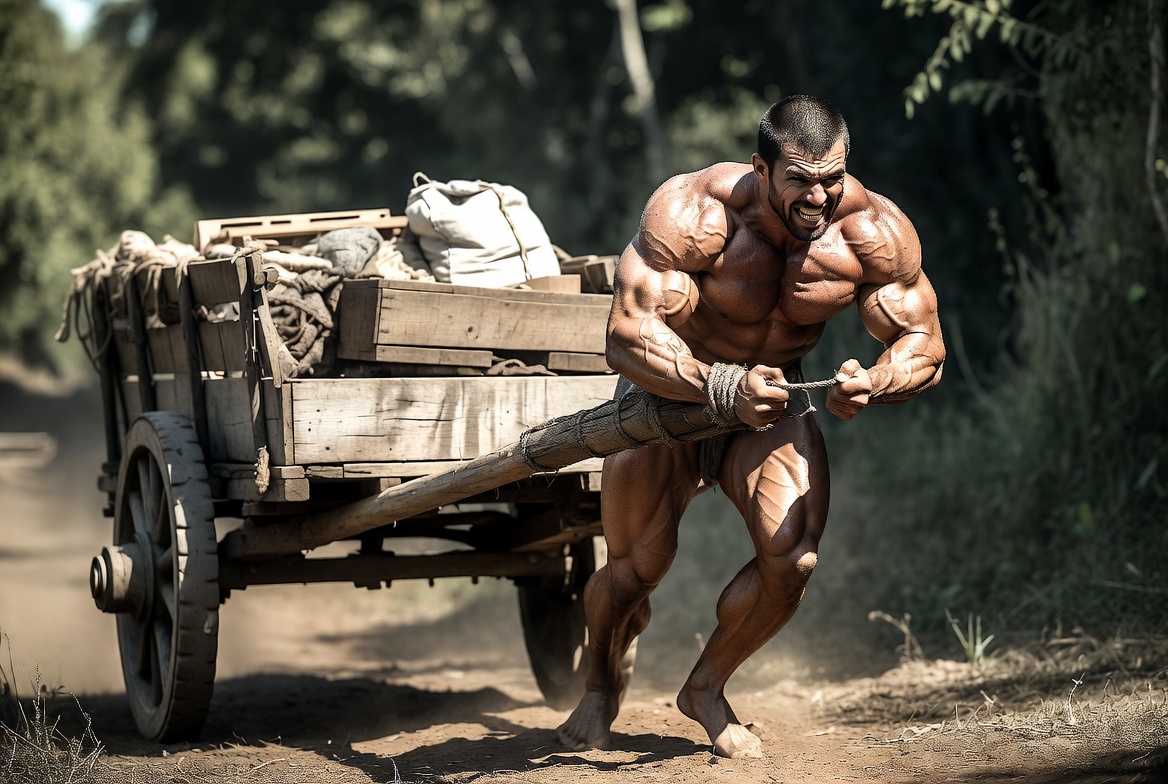
I had seen the gear of it that afternoon, on the pony in the lane, and pitied him it, and here in the straw was the boy beside me wearing it as well. What I did not yet know was that every man in that stable wore the same, that it was no more to be escaped than the brand, and that mine would be fitted to me the very next morning: the cinch they put on a slave to bind his sex up tight and high and hold it out bare on the front of him, so that not even that is left him to keep or to cover. Those same balls the boy had admired would ride there on show from the next day on, for any road to see. Still less did I know that I would come, in a year or two of it, to carry them the prouder for the showing. That night I wanted only to be covered, and was not, and would not be again.
He is the one from that night I have least been able to understand, and have long since given up trying. He was happy, not the face a beaten man learns to put on to save himself trouble, but happy to the bone. They had schooled him to the place from the start, and it had taken, as good schooling does: he liked his quickness and his usefulness and his standing, liked being wanted and well spoken of, and the whole weight of what he was had settled onto him without a struggle and, I have no better word for it, agreed with him. I lay there and could not for my life understand how he was not screaming, and that, worse than the bench behind me, worse than the wheel still to come, was the sight at Beauvert that frightened me deepest: a kind, glad creature who fit the place as a hand fits a glove, and was the better for the fitting.
He told me, running on, that the master had used him himself not a fortnight since. Himself, he said, with a wonder and a pride that shut my throat. The master had sent down for him by name and taken him before any of the others, first of all, and was that not a fine thing, to be wanted so, and by the Master. Do you believe it, he said. Me. I said nothing. There was nothing left in me to say it with.
Jack let him run. He was fond of him, I could see, as the whole stable was, you could not help it. But when the boy turned that bright face back to me and made to offer me the same, Jack laid a hand to the nape of his neck, gentle, and said, “Only me, pup. Leave the new one be. He’s had a day.” Finch looked put out for the space of a breath, the way a child does, and then it had passed, and he said “course,” and turned back to Jack, easy as water finding its level.
What he did then I will not soften, though every instinct I was raised with wants to: the boy took Jack into his mouth and sucked him, there in the straw a hand’s breadth from my face, gladly, with his whole open heart in it, as he did all things. It was the tenderest and the most terrible thing I had yet seen, and I could not make the two halves of it meet. I kept my eyes on the black above me. But the eyes were the smallest part of it, and the dark gave me the rest for nothing: the soft wet work of it a hand’s breadth off, the catch and ease of the boy’s breath, the heat coming off the two of them into the cold of the box, the smell of straw and oil and warm skin. I learned that night, without the word for it yet, that a man may shut his eyes against a thing and still be made to keep it, and that the not-looking saves nothing. Down the row the other boxes had their low sounds, the ponies two to a stall, a whole barn seeing to itself at the end of its day, and I, who came from a country where a man did not, where I had not, lay rigid and hot in the face and tried with all my strength not to be where I was. Jack’s hand stayed in the boy’s hair the while, not driving him, only resting, the way you keep a hand on a creature you are fond of.
When it was done the boy slipped out again on his quick bare feet, and Jack set his own back against mine where the welts were, and took the chill off them with his own warmth, and asked nothing, and I understood, even that night, even rigid with all I had been made to hear, that this was a different matter from what the boy had done for him, that the warmth was not the relief, and that the difference between the two was very nearly the last thing they had not taken from me.
I lay against him, glad, and not yet knowing what I was being glad of. All down the dark the row went on about its quiet business, the stir of straw, the catch of breath, a hundred men taking the one comfort there was, and as I sank it rose and closed over me, terrible and far-off at once, the way any sound turns to a sea when you are nearly asleep in it. Since the dock I had not slept a night the water did not come for me, the cold green water under the hull I went down into every dream of eleven weeks, and that night I went down instead into this other tide, the warm dark sound of men, and slept, and did not dream of drowning.
I have been ashamed, in the telling of all this, of a great many things, and will be of more before I am done. I am not ashamed of that night. I have turned it over more than any other, looking for the place where I ought to have known to grieve, and never found it, because there was no grief in it: only a man with a broken back and a chain on his legs, sleeping warm against another man’s spine in a locked box, on the land of a stranger who owned them both down to the marrow, and at peace, for the first time since the sea took everything, at peace. That is the worst thing I have to tell you. I have told it badly on purpose. There is no way to tell it well.